Journal goes dark after impersonating Eric Topol and others

Within hours of researchers from prestigious institutions discovering they were listed as authors on a fabricated paper, the website for the journal and publisher has been taken down. 

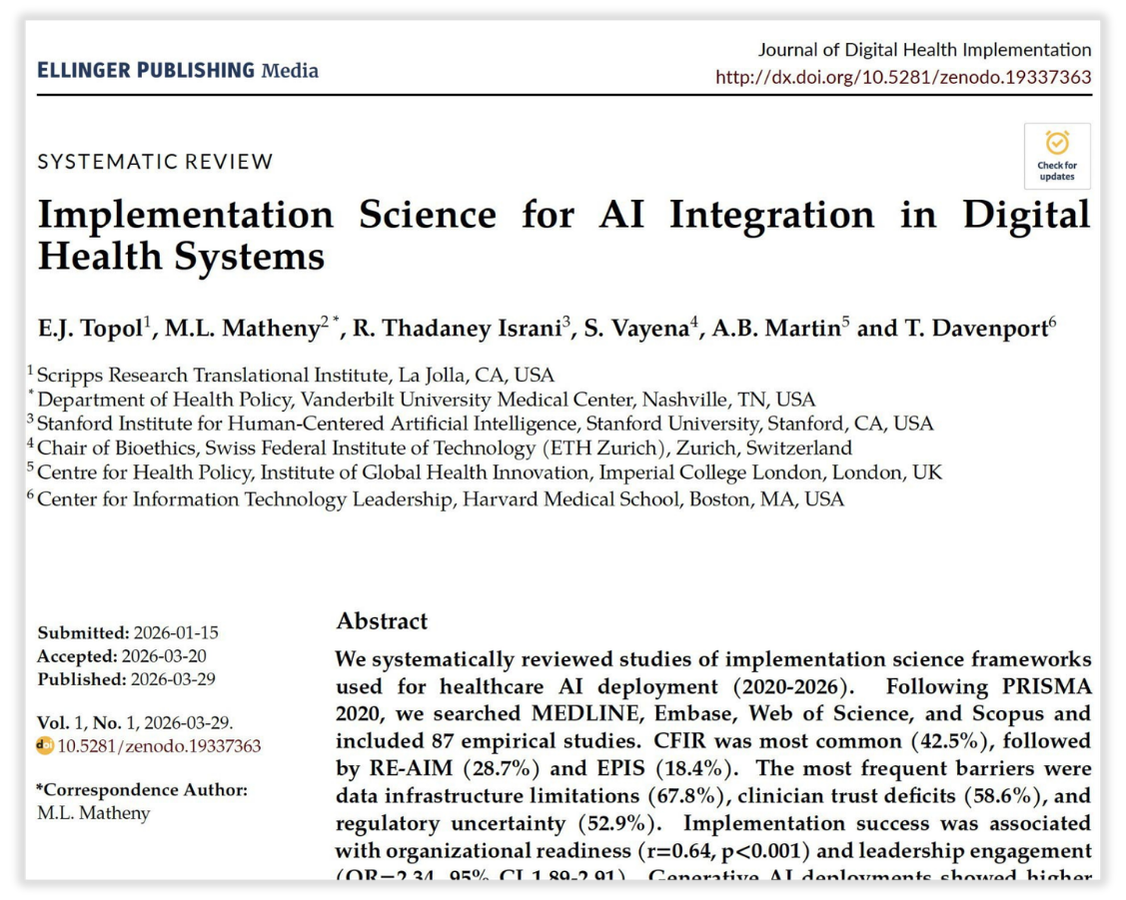
Cardiologist Eric Topol, the executive vice president of Scripps Research, posted on X yesterday that his name appeared on a “fraudulent” paper published in the so-called Journal of Digital Health Implementation. He suspected the article, dated March 29 and titled “Implementation Science for AI Integration in Digital Health Systems,” was AI-generated. 

“If there ever was an AI-generated paper, this one would qualify as a high probability of being so,” Topol, who is also founder and director of the Scripps Research Translational Institute, told Retraction Watch. 

Continue reading Journal goes dark after impersonating Eric Topol and others
‘I asked him to stop’: Father adds daughter’s name to over 100 preprints without her permission

Anja/Pixabay

An author in China with nearly 500 preprints has continued to add his daughter’s name to papers – despite her insistence she was not involved. 

Shifa Liu, whose papers list affiliations with Peking University in China, has posted 499 works (and counting) on topics in physics and mathematics. His daughter, an undergraduate at an American university, is listed as a coauthor on over 100 of those preprints. In some cases, she was even named as the corresponding author. (Retraction Watch is not naming the daughter to respect her privacy and will not be accepting comments that name her.) 

The daughter told Retraction Watch she “did not participate in the research, writing, or submission of any of these papers,” adding her father included her name “without my knowledge or consent.” 

Continue reading ‘I asked him to stop’: Father adds daughter’s name to over 100 preprints without her permission

Publisher demands $500 from impersonated author to retract paper

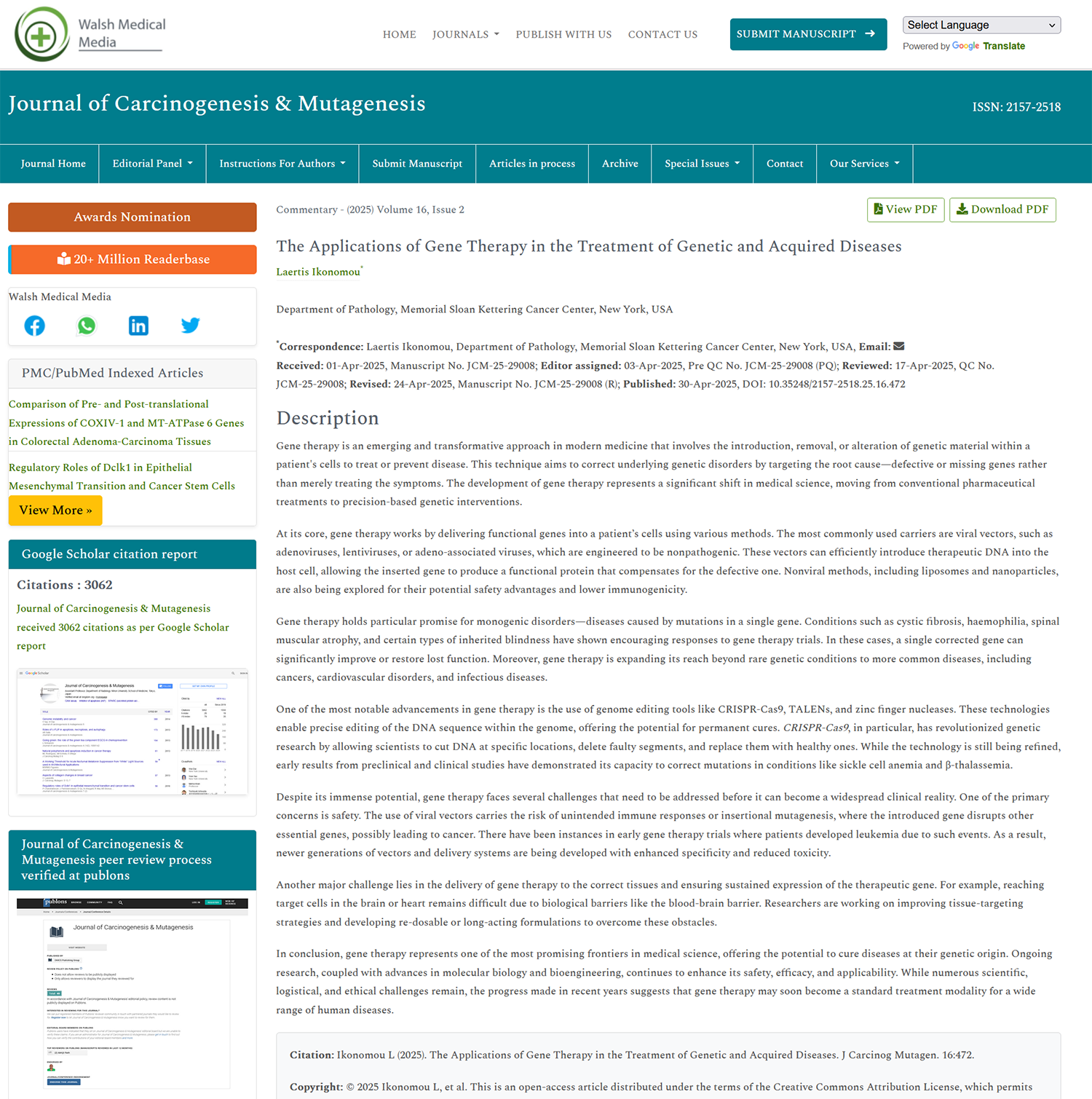
Last year, we wrote about a Walsh Medical Media journal that refused to withdraw an author’s paper unless he paid a fee — even though he didn’t write or submit the article. For one reader, some details of that story were familiar.  

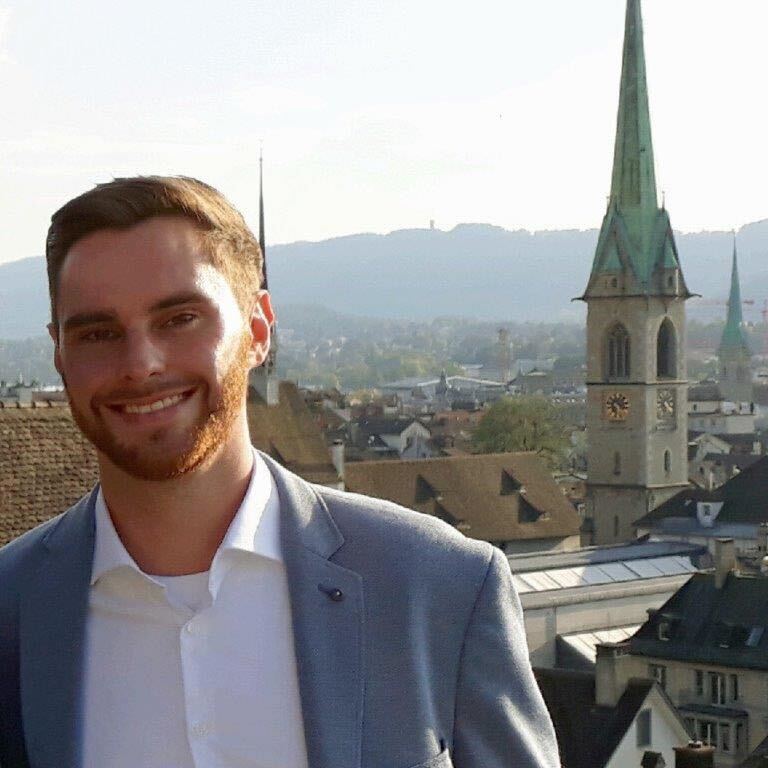
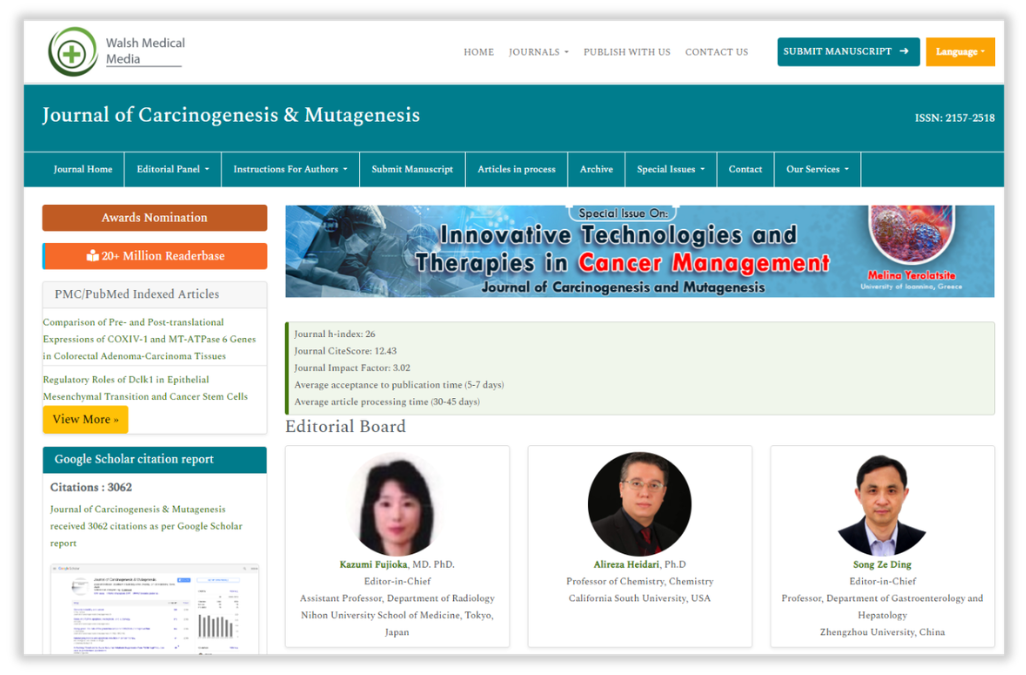
Laertis Ikonomou, an associate professor at the University at Buffalo in New York, discovered last September he was listed as an author on a commentary he had never seen before that had been published in the Journal of Carcinogenesis & Mutagenesis. He immediately requested the journal remove the article, and, like our previous story, the journal demanded a fee to do so. But after a few exchanges, the journal just changed the author on the paper to a different name. 

The Journal of Carcinogenesis & Mutagenesis is one of 77 published by Walsh Medical Media. The publisher calls itself a “global leader” in open access publishing and, although it bills itself as a healthcare publishing company, has journals with specialties ranging from chemical engineering, coastal zone management, and intellectual property rights, as we have previously reported.

Continue reading Publisher demands $500 from impersonated author to retract paper

‘Confusing and frankly, disturbing’: When researchers are impersonated

winyoo08/iStock

Ariel Karlinsky was confused. A Ph.D. student at The Hebrew University of Jerusalem, he had just received a message stating the paper he had submitted to an economics conference in Moldova had been accepted.

But Karlinsky hadn’t submitted his work to the conference. In fact, he had never even heard about the event.

At first, Karlinsky assumed a predatory conference had signed him up without his knowledge. But he recognized the name of one of the organizers, the National Institute for Economic Research, which he knew to be legitimate.

Continue reading ‘Confusing and frankly, disturbing’: When researchers are impersonated

When you discover you’re an author on a paper you’ve never seen

Learning a paper with your name on it has been published is typically something to celebrate. But for one climate scientist, a recent notification was the first he learned the manuscript even existed. 

So instead of rejoicing, Jan Cermak, a researcher at the Karlsruhe Institute of Technology in Germany, was busy writing to the journal Chemosphere about a paper he’d been credited with but never seen.

The paper, on meteorologic influences on air pollution in India, has been retracted after it became clear that a visiting fellow included Cermak as a coauthor without his permission. 

Continue reading When you discover you’re an author on a paper you’ve never seen

AI research journal with sham board, metrics holds researcher’s paper hostage

A journal purporting to be “cited by esteemed scholars and scientists all around the world” claims a false impact factor and attempts to charge authors a fee for withdrawing articles, Retraction Watch has learned. And the editor in chief publicly disavows any relationship with the title on his website.

The International Journal of Swarm Intelligence and Evolutionary Computation, or IJSIEC, claims to publish research on robotics, AI, “bacterial forging [sic],” bioinformatics and computing, among other topics. 

A Retraction Watch reader brought the journal to our attention earlier this month. The researcher had submitted a paper to the journal but then noticed some red flags. Among them: One of the two listed editors-in-chief, Qiangfu Zhao, states on his website, “some journals are using my name to attract academic papers. I have no relation with these journals.” Zhao, a professor at the University of Aizu in Aizuwakamatsu, Japan, confirmed to us he has “no relation with this journal.”

Continue reading AI research journal with sham board, metrics holds researcher’s paper hostage

‘Still angry’: Chemist finds his name on a study he didn’t write

Last October, Martin McPhillie, a lecturer in organic chemistry at the UK’s University of Leeds, received an email alert from his institution about a new article bearing his name. 

The article, “Docking Study of Licensed Non-Viral Drugs to Obtain Ebola Virus Inhibitors,” appeared in the Journal of Biochemical Technology, a title of Istanbul, Turkey-based Deniz Publication. The journal is not indexed in Clarivate’s Web of Science database. 

The study was within McPhillie’s area of expertise, and aligned with work he and the other listed coauthors had previously published. But he knew the new study wasn’t his. 

Continue reading ‘Still angry’: Chemist finds his name on a study he didn’t write

‘Perplexed’ author’s identity forged on plagiarized paper in ‘probably fake’ journal

Steffen Barra

In February, Steffen Barra Googled his name. A clinician working in the field of forensic psychiatry, he was in the habit of periodically checking if anything negative had been written about him. What he didn’t expect to find was a plagiarized paper with his name attached to it. 

Barra, a researcher at the University of Saarland in Germany, told us the 2023 article, “Introducing the Complexities of Forensic Psychology: Decoding the Mind Behind the Crime,”   plagiarized from an information page from a company offering online courses. The article also resembles many college informational pages about the field, such as this one from the University of North Dakota, he said. 

Concerned he might be blamed for the misconduct, Barra immediately contacted the publisher, Hilaris. 

A company representative responded to Barra the same day, February 29, with one phrase: “We will remove the link.” 

Continue reading ‘Perplexed’ author’s identity forged on plagiarized paper in ‘probably fake’ journal

The dean who came to visit – and added dozens of authors without their knowledge

Kumba Digdowiseiso

Earlier this year, a group of lecturers in Malaysia received a WhatsApp message from a colleague who had made a disturbing discovery. 

The colleague, who wished to remain anonymous for this story, was looking through Google Scholar and noticed their name, and many others from their department, repeatedly appeared alongside that of an unfamiliar author: Kumba Digdowiseiso, dean of the economics and business faculty at Universitas Nasional in Jakarta, Indonesia.

“We didn’t even know who this person was,” said Safwan Mohd Nor, an associate professor of finance at the university, Universiti Malaysia Terengganu, adding that he was “extremely angry” when he first found out his name had been used. 

Continue reading The dean who came to visit – and added dozens of authors without their knowledge

Wiley reopens plagiarism case about dead researcher’s work

Zulfiqar Habib, dean of computer science at COMSATS University Islamabad, in Pakistan, was appalled when he discovered part of a former PhD student’s dissertation had been published in a scientific journal.

After all, the former student, Kurshid Asghar, had been dead for more than a year by the time the manuscript was submitted to Security and Communication Networks, a Hindawi title. And Habib knew none of Asghar’s coauthors had contributed to the research, which Habib had supervised. 

“It was both shocking and unbelievable,” he told Retraction Watch.

Continue reading Wiley reopens plagiarism case about dead researcher’s work